From Origin to Finished Stone

The finished stone is only one part of the story. Its origin, selection, craftsmanship and documentation form the path that precedes it.
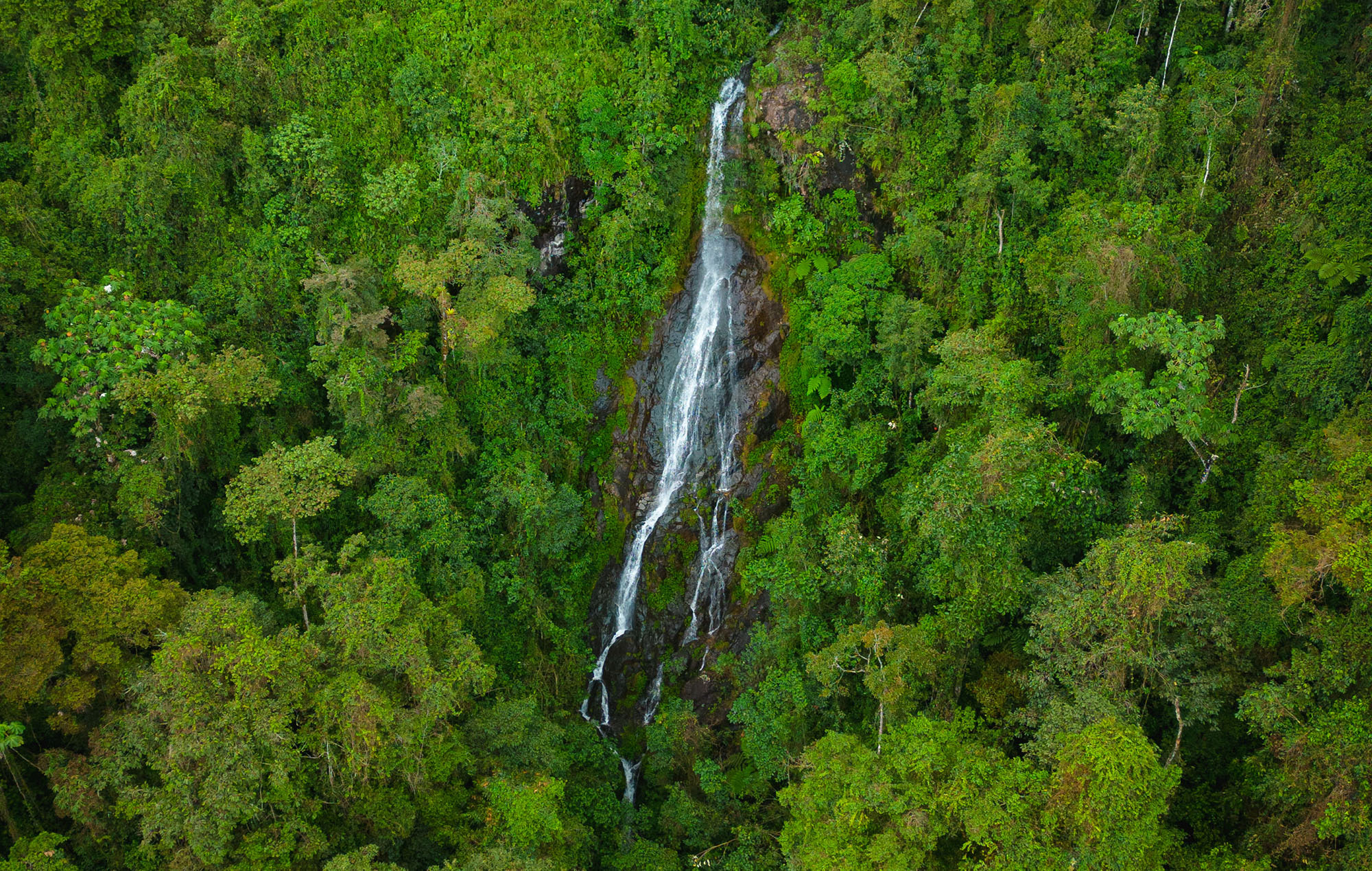
A tall, narrow waterfall cascading down a rocky cliff surrounded by dense, lush green rainforest foliage.
From Origin to Finished Stone

Selection at the Source

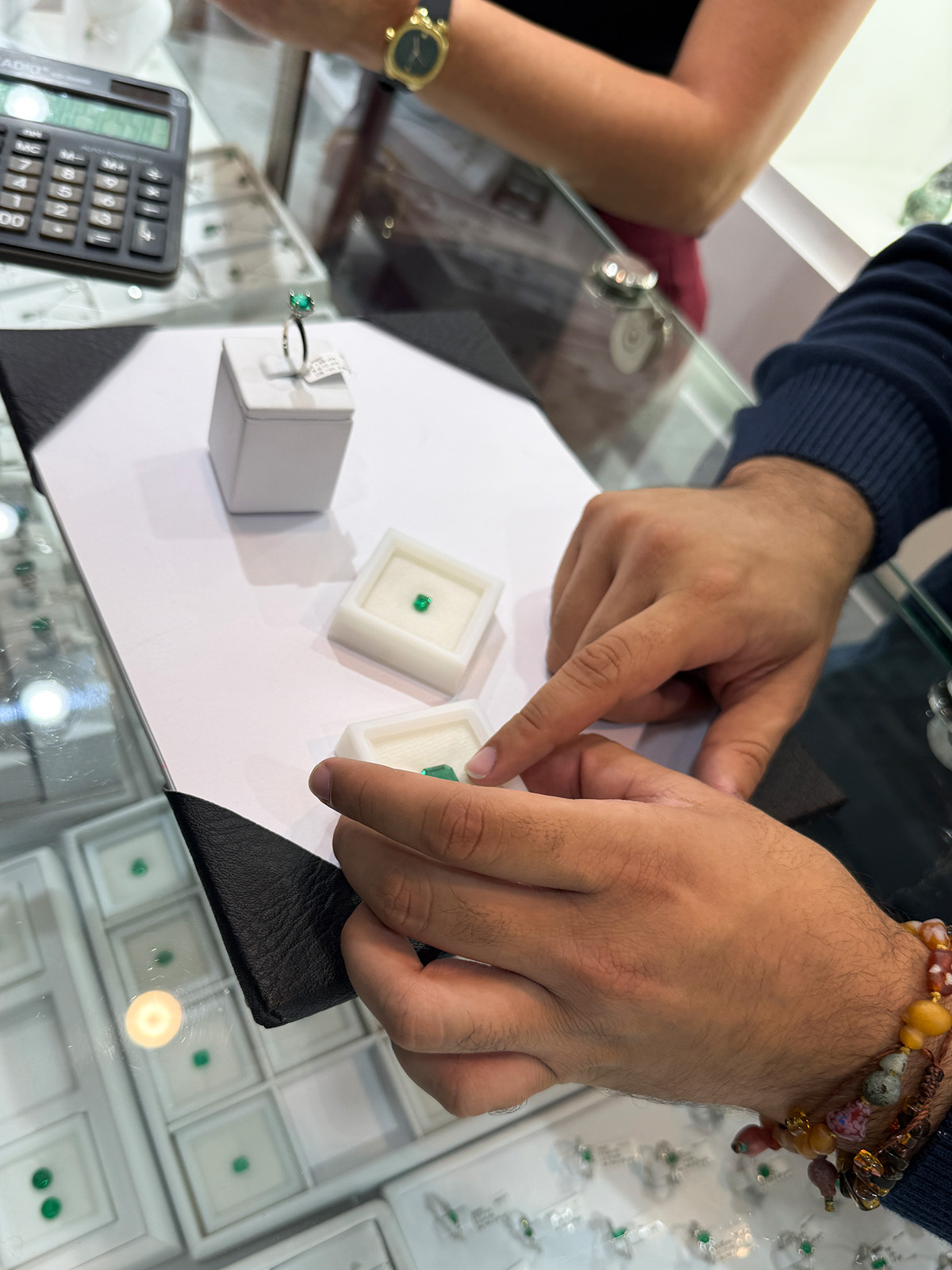
To source our emeralds, we travel personally to Bogotá Columbia, where we work with licensed dealers and established partners with direct connections to the emerald regions of Chivor and Muzo.

For us, the decisive factor is not the available quantity, but the quality of each individual specimen. Ändern in: Our selection is determined not by availability or quantity, but by the quality of the individual stone.
A person's hands displaying green gemstones on white pads and a green gemstone ring on a white stand on a glass jewelry counter, with another person wearing a watch visible in the background.
Selection at the Source
For the procurement of our emeralds, we travel personally to Bogotá. There, we work with licensed dealers and partners who have direct connections to the emerald regions of Chivor and Muzo.

These relationships have grown over many years and are complemented by the Colombian roots within our family. They enable us to source stones outside largely anonymous trading chains and provide direct insight into the origin of the stones.

For us, the decisive factor is not the available quantity, but the quality of each individual specimen.
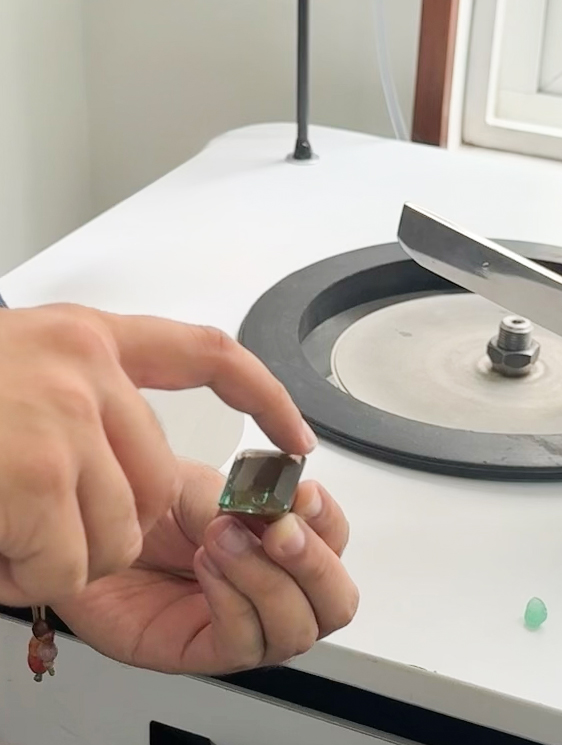
A person holding a polished rectangular green gemstone near a gem-cutting machine with a circular blade on a white surface.
Cutting and Character
The cut plays an important role in how a gemstone's colour, brilliance and character are expressed. The stones we select are worked by experienced cutters and subsequently assessed individually.

Our assessment considers the established characteristics of cut, colour, carat weight and clarity, while recognising that natural emeralds cannot be meaningfully judged by these factors in isolation.

Colour, inclusions, proportions, origin and individual characteristics must be considered together to form a convincing overall picture.

Our selection also includes Trapiche emeralds, distinguished by their characteristic radial growth pattern and their particular place within Colombia's emerald tradition.
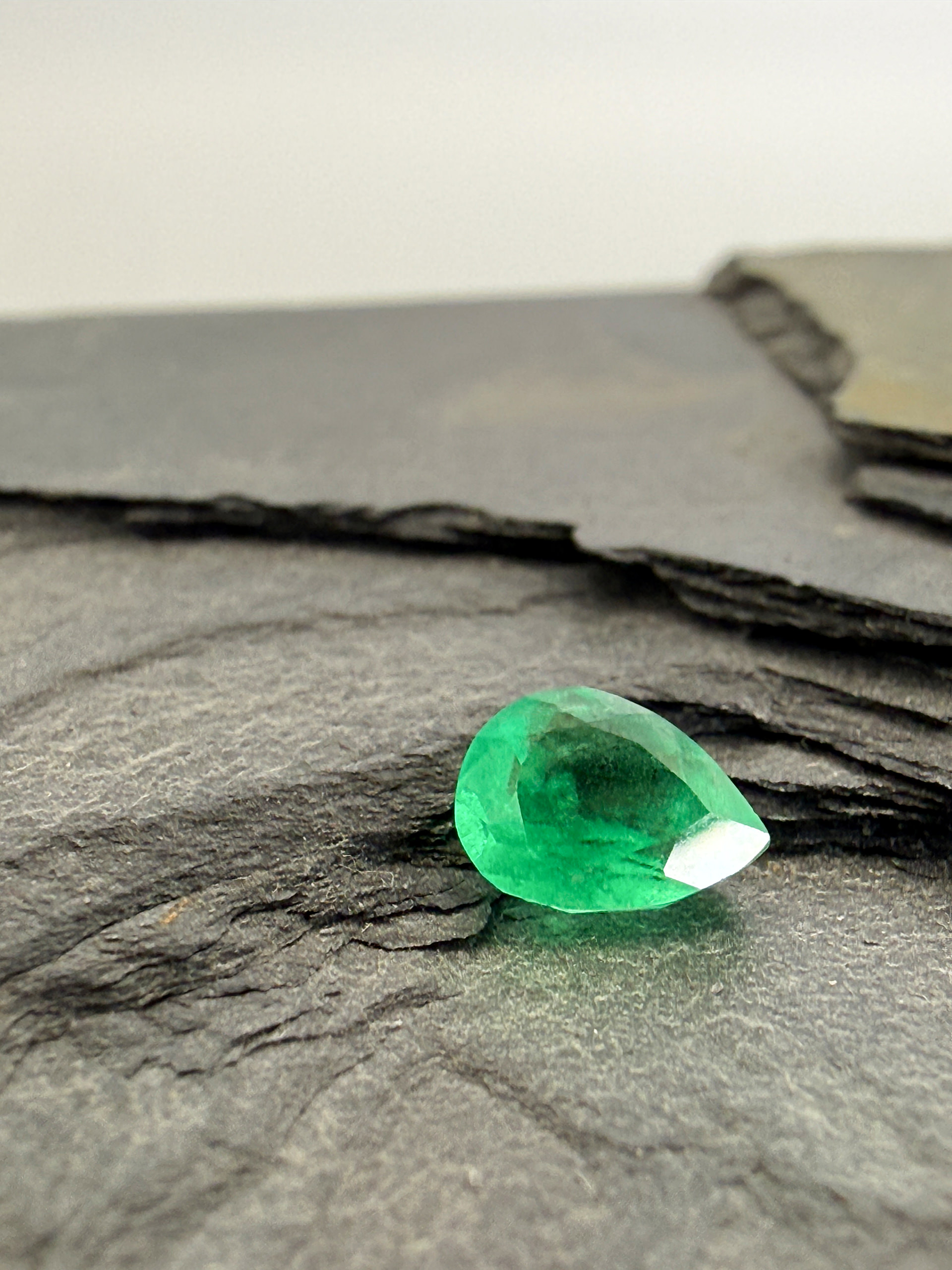
Close-up of a pear-shaped, faceted green emerald gemstone resting on layered dark gray slate stones.
Import and Documentation
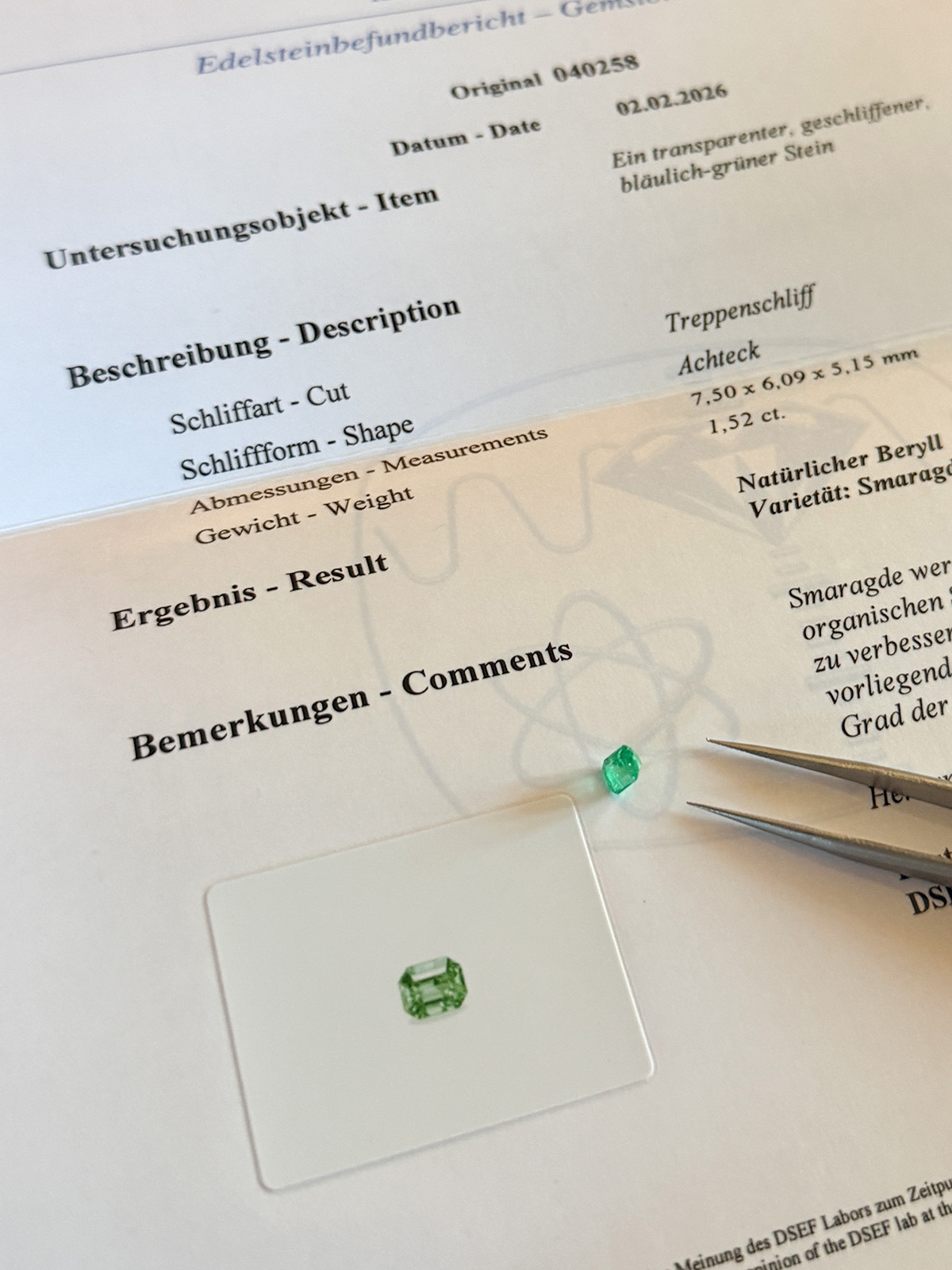
Selected stones are imported through established channels and cleared in accordance with the applicable customs requirements. Relevant information relating to origin, import and subsequent processing is documented throughout the process.

For us, documentation is not a subsequent formality, but an integral part of understanding a stone and its provenance.
Close-up of a gemological certificate in German showing details of a cut, shape, measurement, and weight of a transparent bluish-green gemstone, identified as a natural emerald beryl, alongside a small green emerald held by tweezers and another emerald resting on a transparent card on the document.
Independent Gemological Examination
After import, selected gemstones are submitted to an independent gemological laboratory for examination.

Depending on the individual stone, we work with internationally recognised laboratories such as:

‍GIA · SSEF · Gübelin Gem Lab · DSEF

‍
The laboratory reports document the relevant gemological characteristics of the stone and, where determinable, may provide an opinion on geographical origin as well as information on detected treatments.
Tall illuminated building with vertical orange lights at dusk, surrounded by shorter buildings and trees, with people walking near a small red-lit street vendor stand.
Origin & Responsibility
We source our gemstones through licensed dealers and established partners in Colombia with direct connections to the emerald regions.

In choosing the partners we work with, we place particular importance on:

Legal and transparent sourcing

Compliance with applicable labour standards

The prevention of child and forced labour

Respect for fundamental human rights


For us, responsible sourcing begins with understanding where a stone comes from, working through established relationships and seeking as much transparency as possible about the path it has taken.
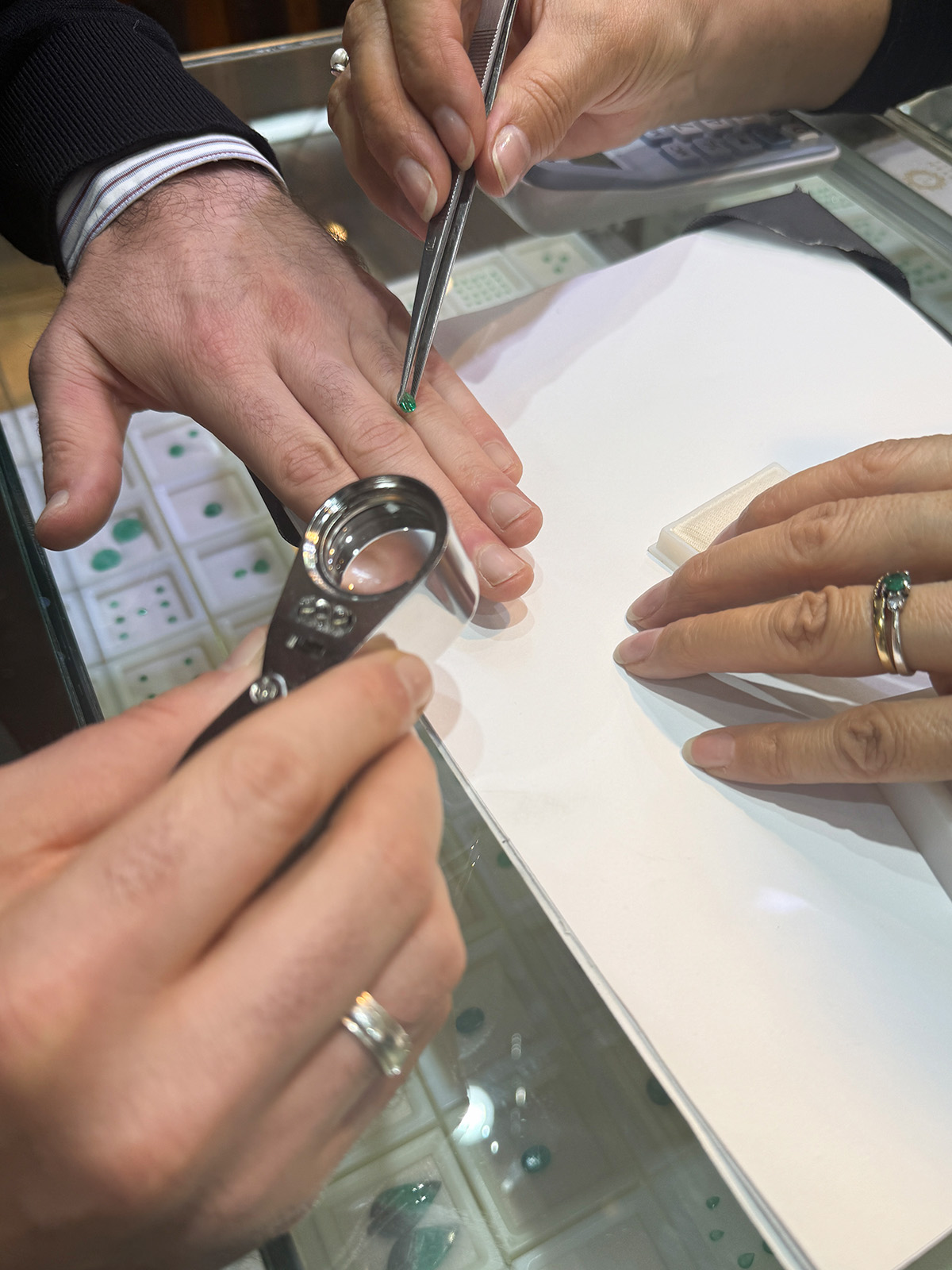
Close-up of two people examining a small green gemstone; one person holds the gem with tweezers over the other's hand while a third hand uses a jeweler's loupe to inspect it on a glass counter with trays of gemstones underneath.
Rarity and Value
The value of a high-quality gemstone cannot be reduced to a single characteristic. Color, clarity, cut, and carat weight form the gemological foundation; added to this are rarity, origin, possible treatment, quality of documentation, and the individual character of the respective stone.

Accordingly, we consider each stone individually.

Through our direct procurement and deliberately short trading routes, we avoid unnecessary intermediate steps. Our pricing is based on the quality and nature of the specific stone and its documented origin.

We communicate prices individually. Just as no two high-quality natural gemstones are completely identical, their valuation should not be schematic.

High-quality gemstones also possess a special form of material permanence. They are physical, portable, and can be passed down through generations. Their significance as jewelry, collectibles, and material assets stretches far back.

However, a factual perspective is crucial: Coriphe does not view gemstones as financial products and makes no promises about future value development.

Our ambition lies elsewhere: we offer selected natural gemstones whose quality, origin, and essential properties are documented as transparently and comprehensibly as possible.

Certificates and, where applicable, valuation reports create a reliable foundation for this – today, as well as for any future revaluation, transfer, or processing of the stone.